


Legal Essentials for Entrepreneurs: Intellectual Property and Growth
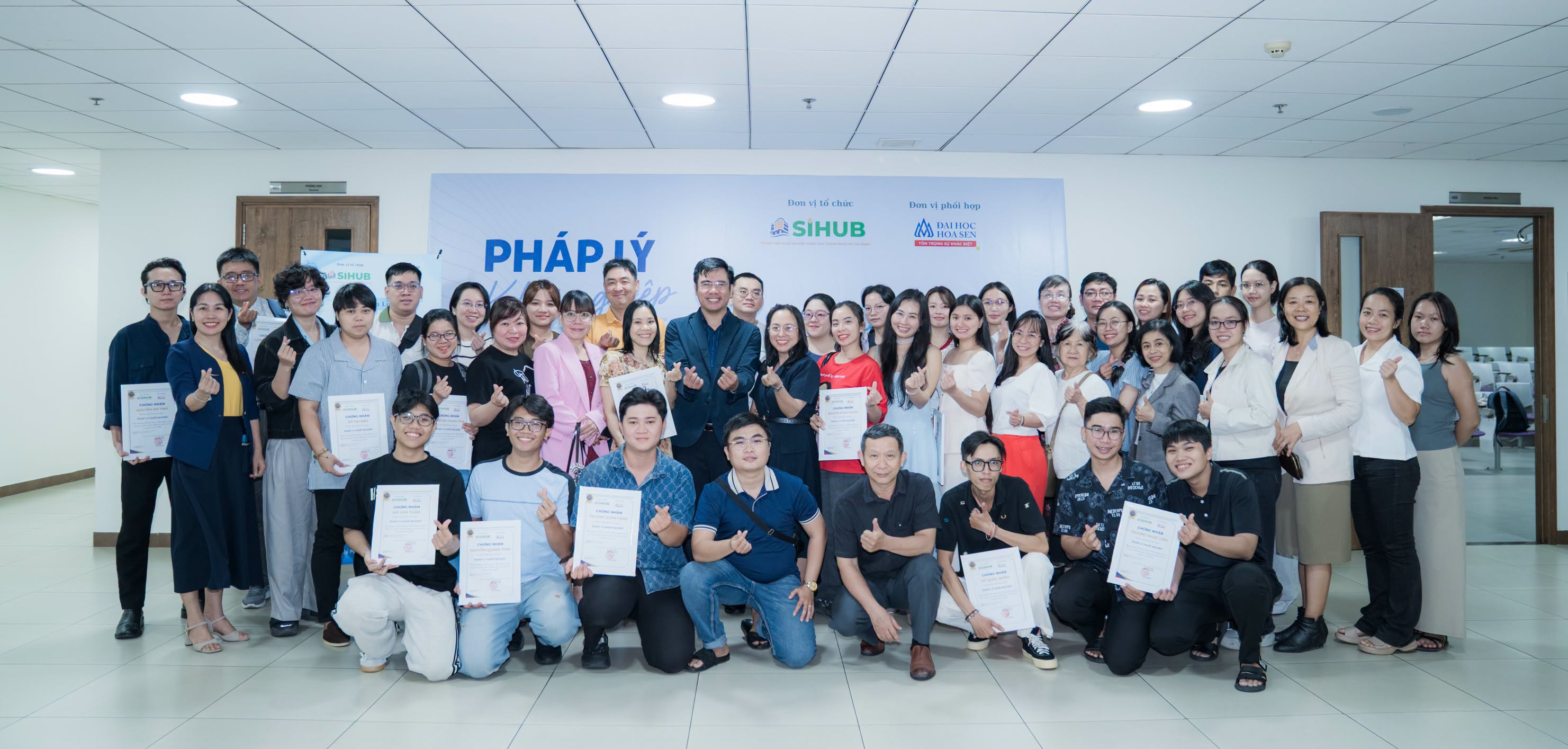
A great idea and strong growth potential are not always enough to attract investment. Even a single legal gap uncovered during due diligence can raise concerns and affect an investor’s decision. This was one of the key issues explored at the “Startup Legal Essentials” seminar, held on August 17 and 19, 2026, and organized by the Department of Science and Technology, Star and Innovation Hub of Ho Chi Minh City, and the Student Center at Hoa Sen University.
Intellectual property: Addressing Blind Spots Early
On August 17 and 19, 2026, the “Legal Essentials for Entrepreneurs” seminar was held by the Department of Science and Technology, Startup and Innovation Hub of Ho Chi Minh City (SIHUB), and the Student Center at Hoa Sen University (HSU).
Speaking at the seminar, Lawyer Tran Nhat Hoang, Director of CBI Law Firm, presented a noteworthy scenario that investors might encounter when conducting due diligence on startups.

He emphasized that a product, piece of content, or intellectual property could come from a founder, employee, freelancer, or agency. However, without a clear ownership agreement, determining who actually owned the asset could become a challenge when a startup entered the due diligence process.
He further noted that, for investors, the issue went beyond paperwork, as unclear intellectual property rights could directly affect the value of a startup’s assets and its ability to use and commercialize them in the future.

AI-Driven Opportunities and Copyright Concerns
As AI continues to evolve rapidly, startups are facing increasingly complex legal considerations. When businesses use AI to create content, develop products, or process data, questions about data sources, usage rights, and copyright need to be considered from the outset.
Furthermore, AI-generated content can open new possibilities, but it does not automatically come with unrestricted usage rights. For startups pursuing commercialization or investment, clarifying those rights is essential.

Business-Driven Legal Framework Development
For investors evaluating a startup, a promising idea and strong growth potential are only part of the picture. Transparency in legal status, finances, contracts, ownership structure, and intellectual property can also shape investment decisions.
Additionally, intellectual property that has not been legally transferred to the company, an unclear ownership structure, or unresolved tax obligations can require startups to incur additional costs to address these issues, while also affecting investment decisions and business valuation.

The real-world situations shared at the workshop highlighted an important lesson for aspiring entrepreneurs: legal matters are not something to address only when it is time to raise capital, but a foundation that should be built into the business from day one.

Through engagement with experts and the startup ecosystem, HSU continues to connect students with real-world market challenges, equipping them to approach ideas, products, and business models with greater initiative and practical awareness.







Translated: Tai Do