

HSU Research on Generative AI and Learning Featured at ICAAHI 2026
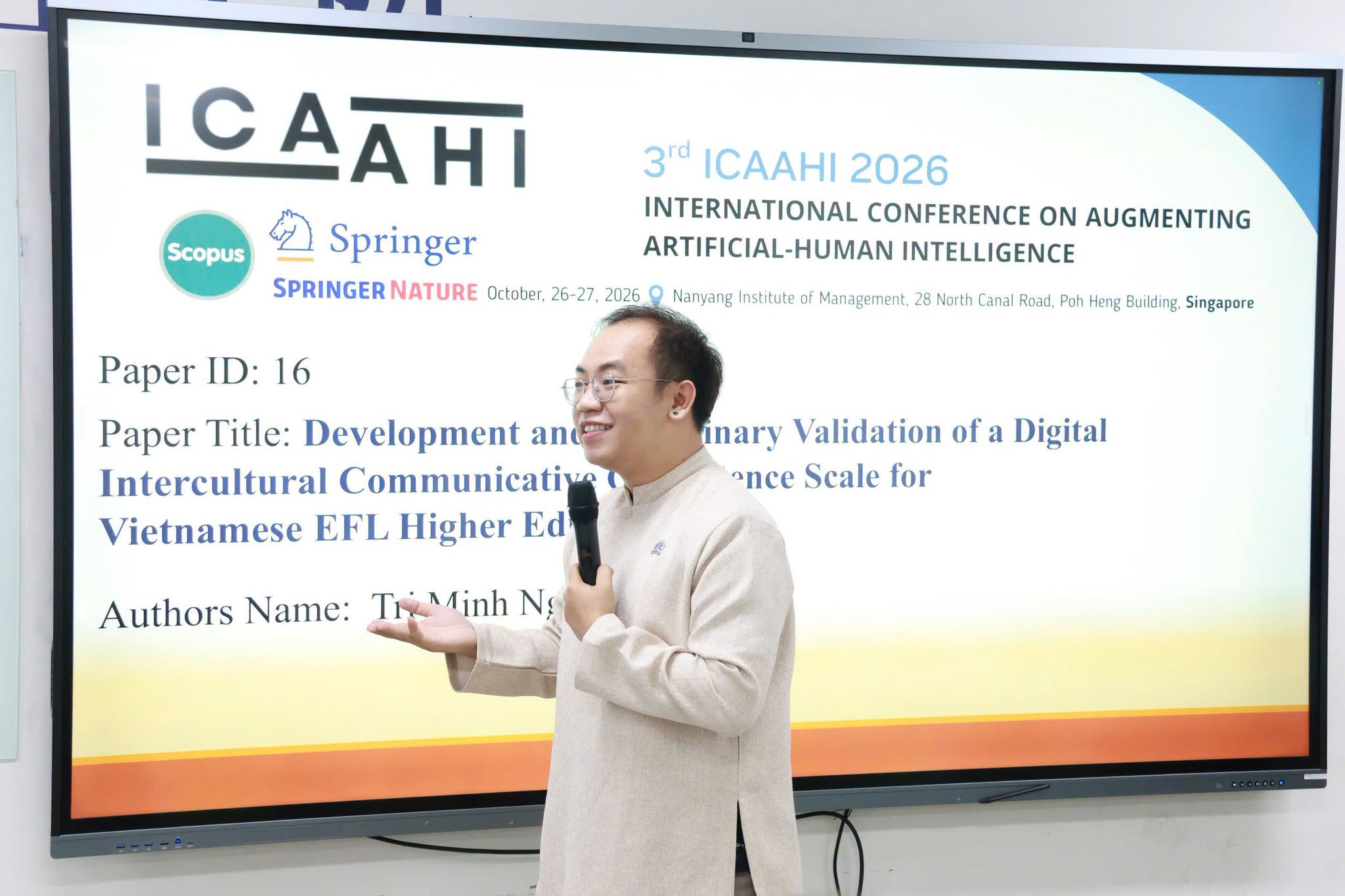
Generative AI offers new ways to learn, but it also raises an important question: can greater reliance on technology come at the expense of deeper understanding? Mr. Nguyen Minh Tri, MA, Director of the English Language Studies Program at Hoa Sen University (HSU), brought this question to the international academic community through his research presented at the International Conference on Augmenting Artificial-Human Intelligence (ICAAHI 2026), held by Nanyang Institute of Management in Singapore.
Presenting AI Research at ICAAHI 2026
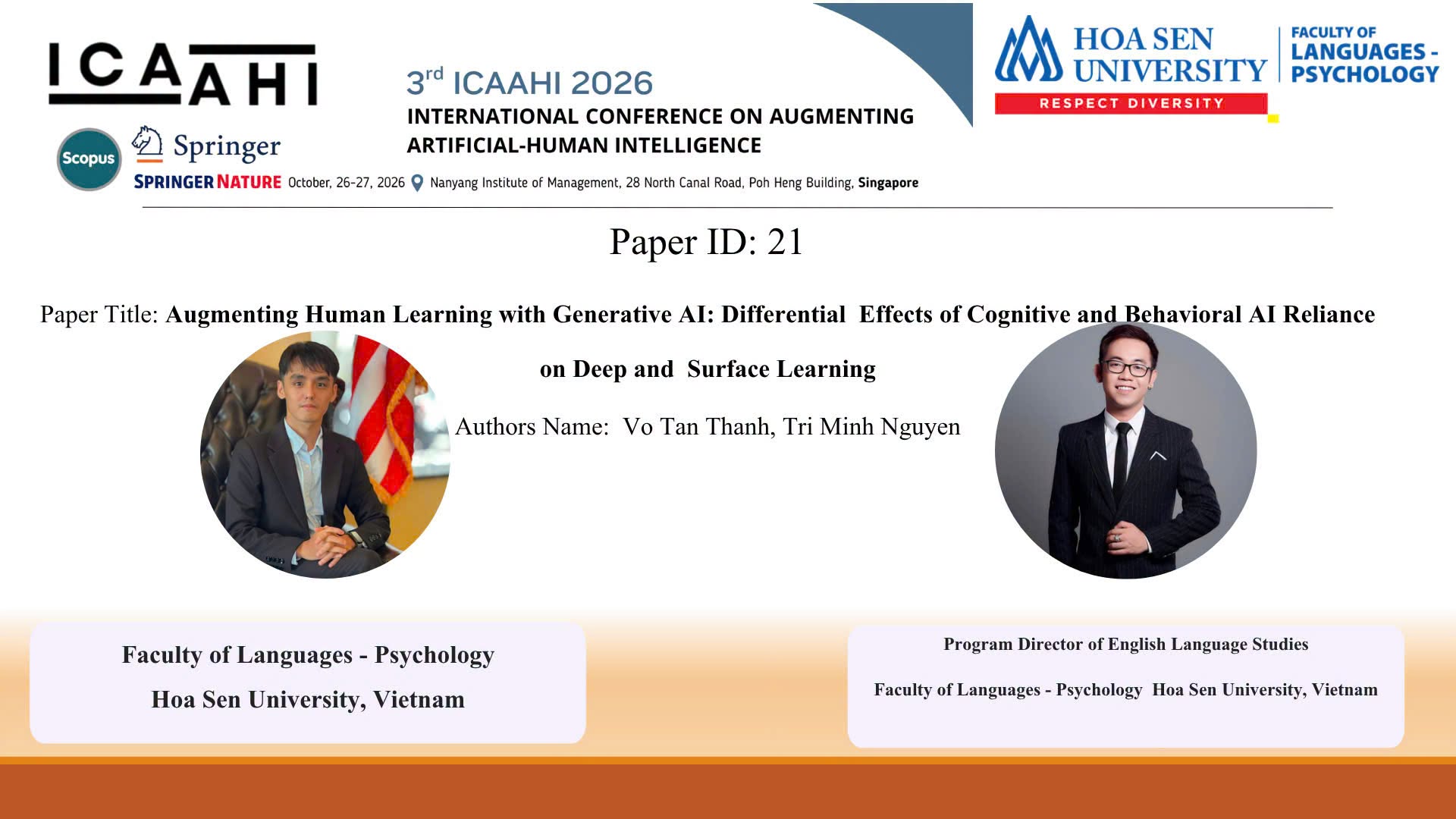
Recently, Mr. Nguyen Minh Tri, MA, Director of the English Language Studies Program at Hoa Sen University (HSU), and HSU alumnus Mr. Vo Tan Thanh brought their collaborative research to the international academic community at the International Conference on Augmenting Artificial-Human Intelligence (ICAAHI 2026), hosted by Nanyang Institute of Management in Singapore.
Presented on October 26, 2026, their paper, “Augmenting Human Learning with Generative AI: Differential Effects of Cognitive and Behavioral AI Reliance on Deep and Surface Learning,” explores the relationships between different forms of AI reliance and approaches to learning.
As AI-powered tools become increasingly integrated into learning, they are changing how students access information, complete assignments, and review course materials. These developments also raise important questions about independent thinking and the depth of learning. At ICAAHI 2026, Mr. Nguyen Minh Tri presented research that brought these questions to an international audience, reflecting HSU lecturers’ ongoing engagement with academic discussions on AI and the future of education.
The study examines how cognitive and behavioral reliance on AI relates to two approaches to learning:
- Deep learning: Emphasizes understanding concepts and applying knowledge;
- Surface learning: Focuses on memorizing information, often for short-term retention.
Therefore, the study provides a nuanced perspective on how learners interact with AI in an increasingly digital higher education environment.
Instead of asking whether AI is simply good or bad for learning, it investigates how two dimensions of AI reliance, cognitive and behavioral, relate to two learning approaches: deep learning and surface learning. Furthermore, this approach raises a more specific question: Do cognitive and behavioral reliance on AI relate to deep and surface learning in the same way, or do their effects differ? This distinction is reflected in the phrase “differential effects” in the paper’s title, which refers to the varying relationships between different dimensions of AI reliance and learning approaches.
For learners, distinguishing between deep and surface learning has practical implications. Completing an assignment does not necessarily mean that a student has fully understood or can apply the knowledge, just as quickly memorizing a large amount of information does not guarantee the ability to solve new problems. These perspectives encourage lecturers and students to reflect on how AI can support learning while preserving the independent thinking that meaningful learning requires.
Academic Mentorship in Scientific Research
At HSU, learning extends beyond the classroom and continues long after graduation. Reflecting the university’s “Utility-oriented” educational philosophy, this research highlights how lecturers guide students in scientific research and help them develop their academic interests.
The collaboration between Mr. Nguyen Minh Tri and Mr. Vo Tan Thanh illustrates how the lecturer-student relationship can evolve into a lasting academic partnership beyond graduation. Taking research from an initial question to an international presentation offers young researchers valuable experience in developing ideas, analyzing evidence, and communicating findings to the academic community.
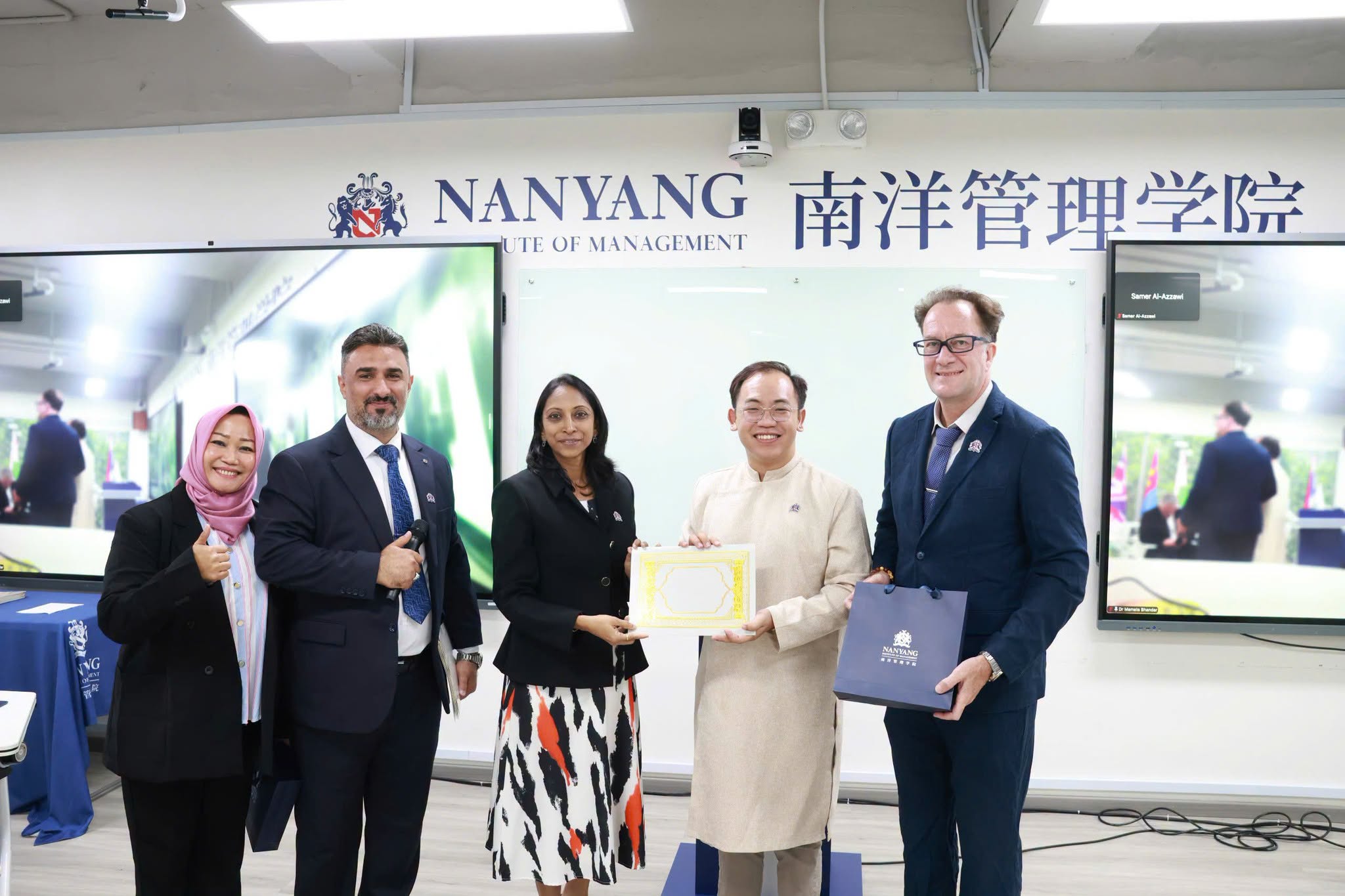
Held on October 26 – 27, 2026, ICAAHI 2026 created an international forum for scholars to discuss how AI and human interaction are evolving in the digital era.
This setting offered a timely opportunity to exchange perspectives on the role of AI in education and its implications for learning. Presenting research at an international conference is an opportunity to share ideas, engage with different academic perspectives, and bring locally developed research into a wider conversation. For HSU, the presentation of this study marks an opportunity to share its work on AI and learning with the international academic community.
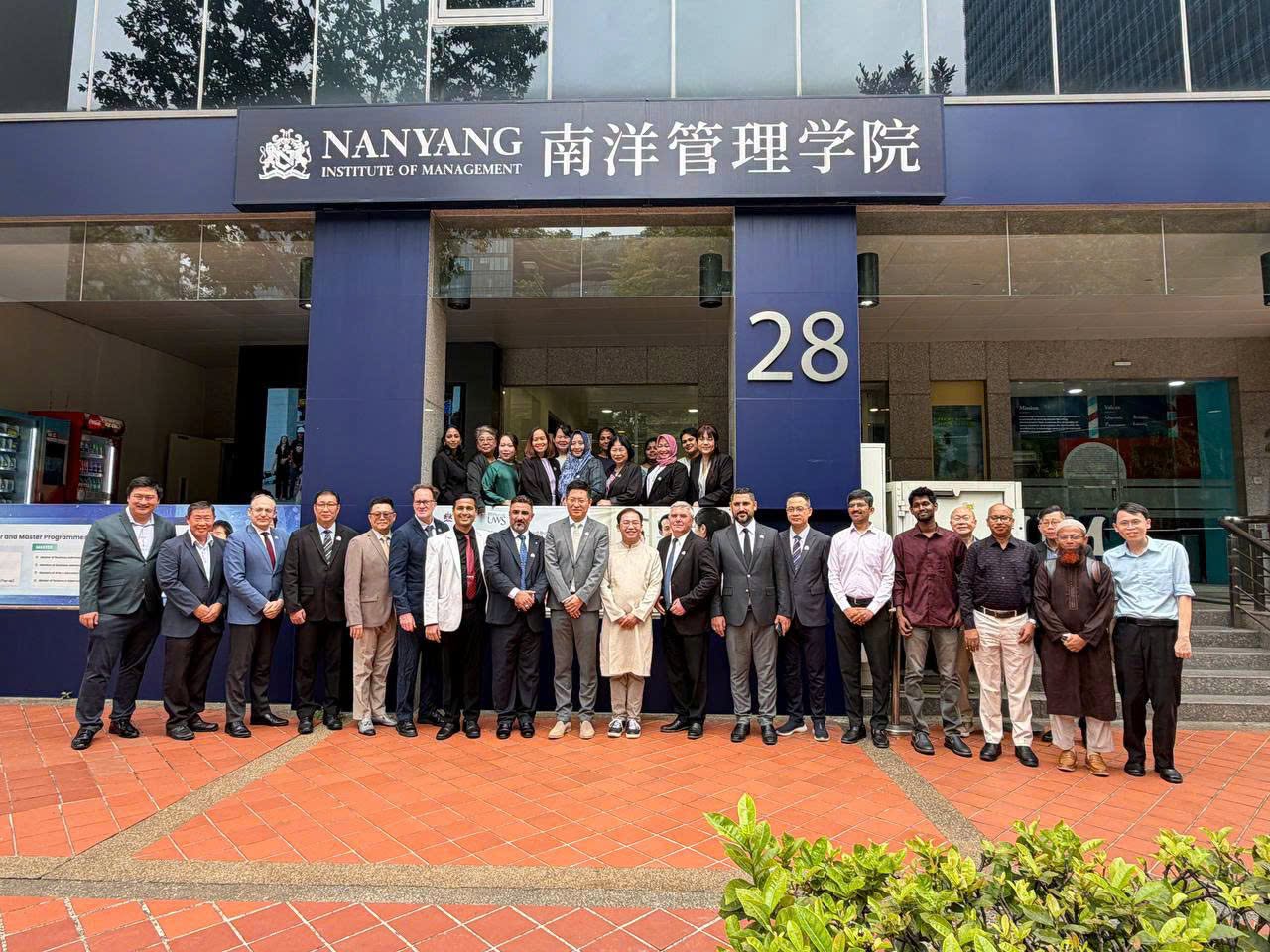
The partnership between Mr. Nguyen Minh Tri and Mr. Vo Tan Thanh demonstrates how academic collaboration can extend beyond the classroom and continue beyond graduation. By investigating students’ use of AI in learning, their research addresses a question that educators encounter in practice and examines it through a scientific lens. This connection between research and teaching can help generate insights that are relevant to both academic inquiry and educational practice.
Building on this achievement, HSU hopes to encourage more faculty members and students to pursue their research interests, present their findings internationally, and take part in meaningful academic exchange. Each contribution helps foster a culture of inquiry and innovation while advancing HSU’s “Utility-oriented” philosophy.
Translated: Tai Do